Customer Experience
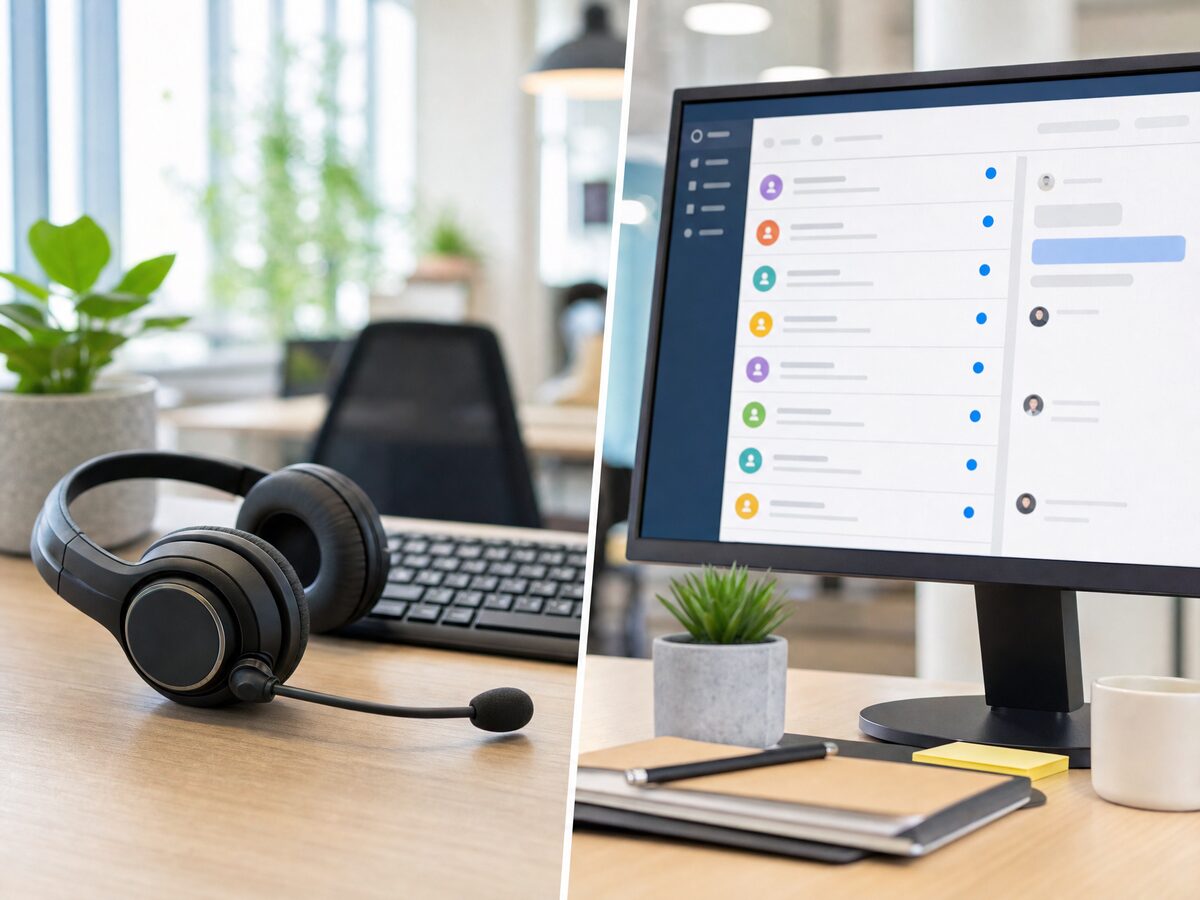
The pattern shows up in every e-commerce operations forum: a store owner handling 40 or 50 inquiries a day, most of them order status, return requests, and basic product questions, trying to decide between hiring, outsourcing, and AI.
The per-ticket numbers make AI look like an obvious answer. An AI interaction costs roughly $0.50–0.70 against $8–15 for a human agent, and current AI agents genuinely resolve 65–80 percent of tier-one tickets — order tracking, returns, product FAQs — without a person involved. A full-time domestic support hire, once you count benefits, training, and turnover, lands between $55,000 and $73,000 a year.
But the most instructive story of the past two years points the other way. Klarna went all-in on AI support, published impressive early numbers, then quietly started hiring human agents again after satisfaction dropped on complex cases and engineers ended up fielding customer calls the AI could not handle. The lesson is not that AI support fails. It is that full replacement is the wrong model. AI processes volume brilliantly and nuance poorly.
So the practical question is not 'AI or humans' — it is which tickets go where. The structure that works:
AI handles the repetitive majority. Order status, return initiation, shipping policy, product availability. This is 60–80 percent of most stores' volume, it arrives at all hours, and it is exactly what the technology is good at. Deflecting it is what makes response times drop from hours to seconds.
Humans handle everything with stakes or emotion. A damaged engagement ring, a delivery that missed a wedding, a chargeback threat, an angry repeat customer. These are the interactions that decide whether someone buys from you again, and they are precisely where AI performs worst.
Someone owns the escalation path. The most common failure mode is not bad AI — it is an AI with nowhere to send the 20 percent it cannot resolve. If escalations land in an inbox nobody checks until morning, the AI's speed on easy tickets buys you nothing.
On the outsourcing option: offshore support typically runs $10–15 an hour, which undercuts a domestic hire substantially. The trade-offs are product knowledge and quality control, and they are real — but they are also solvable with documentation and management, which is why the strongest setups we run combine AI deflection on tier one with a small trained human team on everything else.
If you are at the 40-tickets-a-day stage, the honest math says: do not hire a full-time agent to answer 'where is my order' all day, and do not put an unsupervised bot in front of your angriest customers. Split the queue.
The per-ticket numbers make AI look like an obvious answer. An AI interaction costs roughly $0.50–0.70 against $8–15 for a human agent, and current AI agents genuinely resolve 65–80 percent of tier-one tickets — order tracking, returns, product FAQs — without a person involved. A full-time domestic support hire, once you count benefits, training, and turnover, lands between $55,000 and $73,000 a year.
But the most instructive story of the past two years points the other way. Klarna went all-in on AI support, published impressive early numbers, then quietly started hiring human agents again after satisfaction dropped on complex cases and engineers ended up fielding customer calls the AI could not handle. The lesson is not that AI support fails. It is that full replacement is the wrong model. AI processes volume brilliantly and nuance poorly.
So the practical question is not 'AI or humans' — it is which tickets go where. The structure that works:
AI handles the repetitive majority. Order status, return initiation, shipping policy, product availability. This is 60–80 percent of most stores' volume, it arrives at all hours, and it is exactly what the technology is good at. Deflecting it is what makes response times drop from hours to seconds.
Humans handle everything with stakes or emotion. A damaged engagement ring, a delivery that missed a wedding, a chargeback threat, an angry repeat customer. These are the interactions that decide whether someone buys from you again, and they are precisely where AI performs worst.
Someone owns the escalation path. The most common failure mode is not bad AI — it is an AI with nowhere to send the 20 percent it cannot resolve. If escalations land in an inbox nobody checks until morning, the AI's speed on easy tickets buys you nothing.
On the outsourcing option: offshore support typically runs $10–15 an hour, which undercuts a domestic hire substantially. The trade-offs are product knowledge and quality control, and they are real — but they are also solvable with documentation and management, which is why the strongest setups we run combine AI deflection on tier one with a small trained human team on everything else.
If you are at the 40-tickets-a-day stage, the honest math says: do not hire a full-time agent to answer 'where is my order' all day, and do not put an unsupervised bot in front of your angriest customers. Split the queue.